

Written 7-19-2020
The Portland Art Museum opened again this weekend with Museum Free Days so we ordered our tickets online, and visited this morning. We got there early enough to have it to ourselves for a moment before the masses arrived.
 We can work out. We can eat out. We can go out to shop. We can go on remarkable field trips. We’ve visited world class churches, and we’ve been known to attend memorable shows and concerts. Somehow though it does not feel like we’re really out there unless we are wandering around an art museum.
In slightly dimmer light and refrigerated air we join in with the artist’s conversations by shaking our heads, or turning away, or just standing there endlessly in amazement.
All their works tell stories, and who doesn’t like a good story? They can reflect who we are, or who we were, or where we changed. Did we really change?
When I was a kid I enjoyed Tarzan stories, especially when he would swing from one vine to the next to commute around the jungle. When I was a teenager, I also couldn’t get enough of the George of the Jungle cartoon series. George would swing around on vines too but often smacked into trees if he missed a vine.
In a sense, all artist swing along either paying homage to previous artist, or deliberately swinging away from previous art. When you visit their work in art museums, you get to swing along and join all that movement. And it feels different after you can start to see what they see, or what they saw. It’s fun to get dizzy with them.
If it has been too long since our last art museum visit, it feels like we ran out of vines ourselves, and smacked right into a tree. Alas, this morning we stood on the appropriate red circles in the elevator so we could swing with the show, Art and Race Matters: The Career of Robert Colescott.
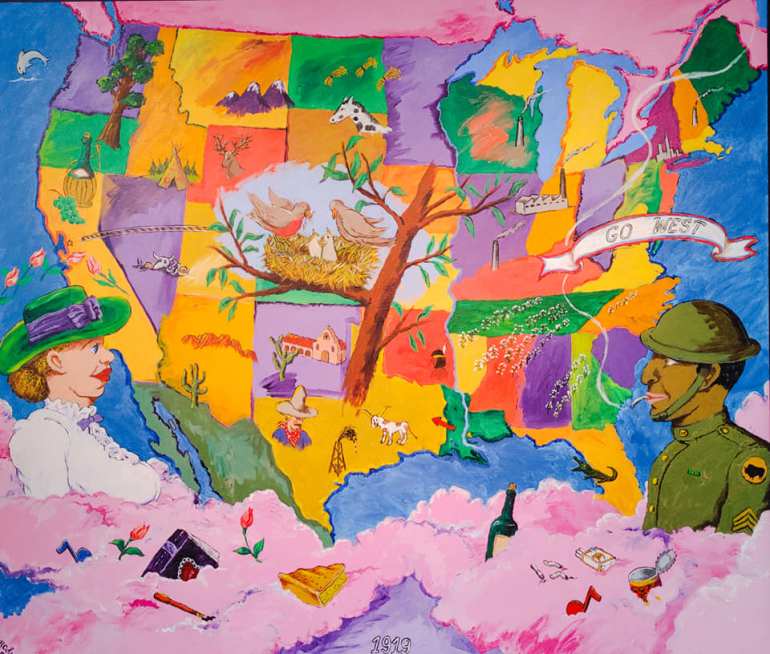
Robert Colescott (1925-2009) established his career in Portland with the support of gallery owner and philanthropist Arlene Schnitzer, then made his mark on the art scene in the 1970s with paintings that deconstructed well-known masterpieces of art history (such as Pablo Picasso’s 1907 Les Demoiselles d’Avignon in the Museum of Modern Art, which Colescott painted in 1985) by black-facing some of the female figures. This provocative strategy challenged longstanding taboos about racial stereotyping while allowing Colescott to achieve his stated purpose to “interject blacks into art history.”
We then swung over to Volcano! Mount St. Helens in Art, an exhibit commemorating the 40th anniversary of the great eruption of Mount St. Helens in 1980. Artist here examined the awesome beauty and power of the volcano.
Finally, we caught some snappy penny loafers, and a funny donut card at the gift shop as we swung out the door.
We’re good. Now. For awhile.
 Cache of Communiqués